 Find a Doctor
 Locations
  Services
You Inspire The Best in Us.
With the many advances in care and treatments, today’s patients have more and more reasons to expect the best outcomes. Here are the incredible stories of our patients and their journeys. Click on a thumbnail and scroll down to view each story.







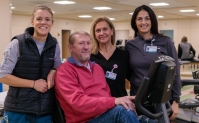

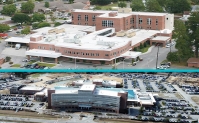
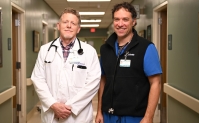
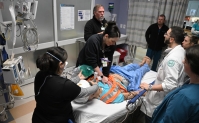


































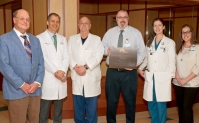



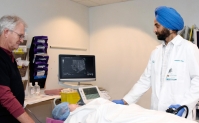

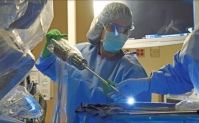





Smarter Systems, More Human Care: McLeod’s Approach to AI in Patient-Centered Care
By Dr. Bryon Frost, Chief Medical Informatics Officer for McLeod Health
Artificial intelligence (AI) has rapidly become one of the most transformative forces of our time. From manufacturing and transportation to education, finance and medicine, AI is reshaping the way we live and work. In health care, this technology is offering new and powerful ways to improve outcomes, reduce burdens on clinicians and enhance patient experience.
At McLeod Health, we are embracing AI innovation not as a replacement for the human touch in medicine, but as a tool that strengthens it. These technologies help our physicians and nurses work more efficiently, spend more quality time with patients and make better informed clinical decisions.
Across the nation, health systems are incorporating AI to tackle some of the field’s most complex challenges, ranging from clinical decision support and diagnostic accuracy to workflow efficiency. By analyzing vast amounts of data quickly and reliably, AI can uncover patterns that help identify disease earlier, alert clinicians to risks in real time, and guide treatment choices that improve patient safety and outcomes.
At McLeod Health, we have built on this national momentum with a structured, clinically driven approach to AI adoption. Our focus is on tools that directly improve the daily lives of our clinical staff and the quality of care we provide for our communities. We are pleased to lead the way in using AI to improve patient care while making daily work better for our care teams.
In my own practice working as an emergency physician, I experience the benefits of AI at the bedside every shift. The emergency department is fast-paced and unpredictable, where accurate information and quick decisions can change outcomes. AI-powered tools help bring the right data forward at the right time, reducing noise and highlighting what truly matters for patient care.
By cutting down on documentation and administrative tasks, these technologies give me more time to focus on patient care. Seeing this impact firsthand confirms that AI is not just a concept; it is already improving care in real and meaningful ways.
One of our successes this past year at McLeod has been our use of a generative AI technology known as ambient clinical documentation. This tool securely listens to a patient’s visit and assists the physician or advanced practitioner to create the medical note automatically that includes the details and conditions discussed. The provider then reviews the information, makes any changes needed and submits it to the medical record just as if it had been entered manually.
Currently, about 250 of our McLeod providers use this technology in their outpatient practices to document patient encounters efficiently and accurately.
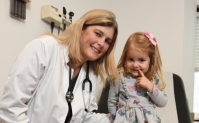
The impact of this AI technology has been significant, and providers report faster note completion and less time spent charting after hours or on weekends. Doctors now spend more time listening to patients instead of typing during visits.
As a result, providers have been able to spend more time with each patient during their visits and report being able to see more patients each day, which helps improve access to care. We have seen notable improvements in patient experience scores for these providers, reflecting the positive influence of more engaged, less burdened clinicians.
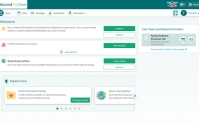
AI is also driving improvements in clinical safety and decision-making. Within our electronic medical record (EMR) system, McLeod Health has implemented several advanced machine learning models called cognitive computing models. One such model is our sepsis model, which continuously evaluates patient data to help identify sepsis early. These predictive tools allow our teams to initiate treatment for septic patients sooner, improving outcomes and saving lives.
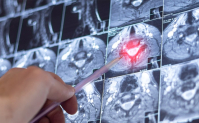
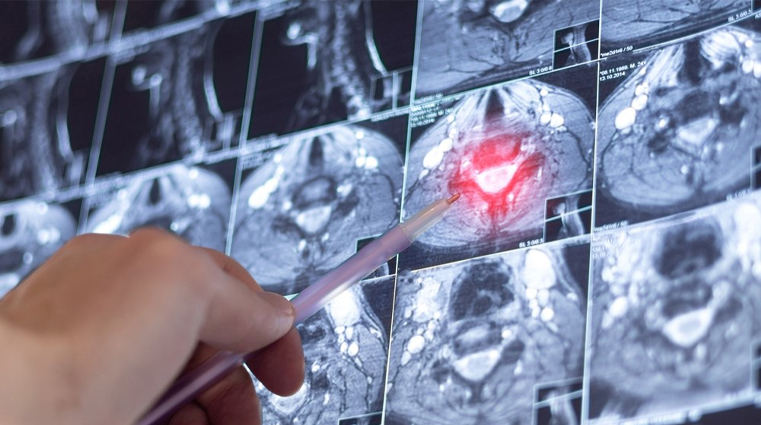
In radiology, we are using imaging based machine learning tools, which support radiologists by quickly analyzing CT and MRI studies for signs of critical conditions such as stroke or hemorrhage. By highlighting potential areas of concern in real time, these tools help radiologists prioritize urgent findings and accelerate diagnosis, especially in emergency settings where every minute matters.
AI is also helping our physicians manage the daily demands of modern medicine. At McLeod, we have adopted Epic’s AI-generated Chart Summary to give clinicians a smarter, more concise view of patient records, allowing faster information retrieval and safer decision-making. Physicians are also using new AI tools like Open Evidence and UpToDate Expert AI to improve decision-making at the point of care. These programs use trusted medical research and the latest peer reviewed medical journals to give doctors accurate, evidence-based information in real time.
By grounding their answers in proven data, these AI tools reduce the risk of “hallucinations,” or wrong answers that can sometimes happen with other AI systems. These types of AI decision support tools help doctors make faster, safer and more confident choices about diagnosis and treatment. These tools illustrate how AI can simplify complexity and give clinicians time back in their day to enjoy the practice of medicine.
Our journey with AI is only beginning. Soon, we plan to expand ambient clinical intelligence capabilities to inpatient providers, bringing the same documentation efficiencies to hospital-based care teams. We are also preparing to implement ambient nursing documentation, which will help nurses automatically capture documentation as they deliver care, further reducing administrative burden and enabling more direct patient interaction.
Each step in this journey moves us closer to a health system where clinicians can focus fully on the human aspects of care, supported by intelligent technology, working quietly in the background. At its core, medicine is still about people caring for people. AI will never replace the compassion, judgment and intuition of skilled healthcare professionals. What it can do is strengthen those qualities by giving us better data, more efficient workflows and more time to build meaningful patient relationships. At McLeod Health, we are committed to standing at the intersection of innovation and compassionate care as we shape the future of medicine for the communities we serve.
Editor’s Note: Look for more information about AI in health care and at McLeod in the next issues of the McLeod Magazine.
-
McLEOD REGIONAL MEDICAL CENTER FLORENCE
843-777-2000 -
McLEOD DARLINGTON
843-777-1100 -
McLEOD DILLON
843-774-4111 -
McLEOD LORIS
843-716-7000 -
McLEOD SEACOAST
843-390-8100 -
McLEOD CHERAW
843-537-7881 -
McLEOD CLARENDON
803-433-3000



-
McLEOD REGIONAL MEDICAL CENTER FLORENCE
843-777-2000 -
McLEOD DARLINGTON
843-777-1100 -
McLEOD DILLON
843-774-4111 -
McLEOD LORIS
843-716-7000 -
McLEOD SEACOAST
843-390-8100 -
McLEOD CHERAW
843-537-7881 -
McLEOD CLARENDON
803-433-3000
