 Find a Doctor
 Locations
  Services
You Inspire The Best in Us.
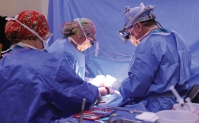
With the many advances in care and treatments, today’s patients have more and more reasons to expect the best outcomes. Here are the incredible stories of our patients and their journeys. Click on a thumbnail and scroll down to view each story.
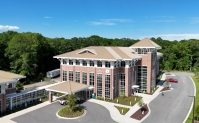
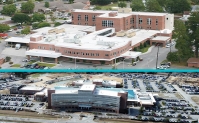











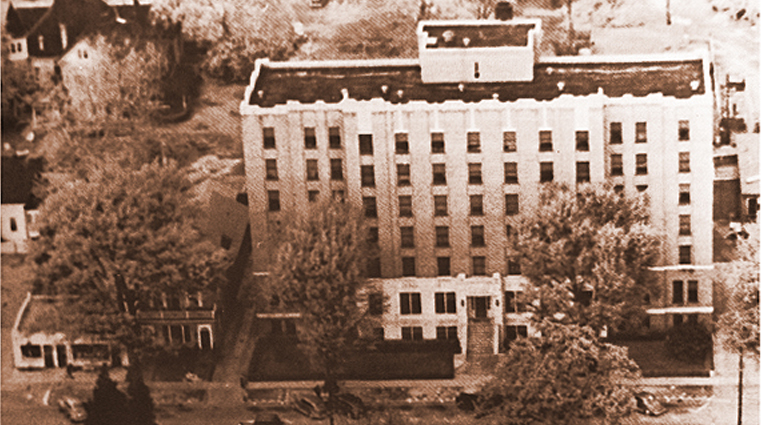
The Story of McLeod Health
It was not yet spring, but the brisk winds were signaling a change of season from the bitter cold. The young mother welcomed the hint of warmer months to come and opened the window of the second story apartment in the downtown hotel. The breezes still were chilly, but it seemed to cleanse the air and atmosphere within the rooms, Mrs. Barringer thought. Her small son Rufus, a fair, curly-haired, bright-eyed little boy of three, echoed her delight in the fresh air with chattering enthusiasm. His voice seemed to compete with the sounds of business and bustling that could be heard all the way up from the street.
Then, what was never supposed to happen, possibly every mother’s nightmare, became a reality for this young woman. In a matter of seconds, Mrs. Barringer watched as her toddler ran to the open window to sneak a peek at the activity below. But before she could react, she watched as her child lost his balance and fell from the window to the pavement more than twenty feet below.
Recognizing the seriousness of the accident, someone who had witnessed his fall below quickly sought emergency care for Rufus, whose whimpering was becoming lower and lower and whose skull was badly crushed by the blow of hitting the street But where would the child be taken for care and whom should be called to help?
There was no 911 or emergency line to access. In fact, there were many folks without phone service in the community or even motor vehicles available for transporting the injured.
Rufus Barringer’s accident occurred on March 8, 1899, more than a century ago. Central Hotel, located on Evans Street at the turn of the century, stood only yards away from the current home of McLeod Regional Medical Center.
According to a historical sketch about McLeod, The History of the Development of a Medical Center by Dr. Larry E. Nelson, related newspaper articles about the tragic incident on microfilm and family recollections, Rufus Barringer was the beloved son of J.L. and M.L. Barringer of Florence, born on December 1, 1895.
Immediately after his plunge to the street, a passerby picked up the boy and rushed him to Palace Drug Store, owned by Dr. Furman P. Covington and Dr. Frank Hilton McLeod, Physicians and Surgeons, proclaimed the signage.
“Dr. Lawrence Y. King, a well-known physician in the city, happened to be in the store at the time and quickly attended to the boy. Seriously hurt, the lad cried a little, but soon lapsed into unconsciousness,” and the other physician hurriedly summoned was Dr. F. H. McLeod.
Since he was fond of children, the situation must have been troubling to him, according to Dr. Nelson’s pen.
Perhaps he knew Rufus because the stricken boy’s father had a place of business in the same building as Dr. McLeod’s medical office, at 209 Evans Street, located on the same end and side of the block that the historic old Florence Post Office stands on today.
Feverishly, Dr. McLeod and his colleagues “devoted their energies to saving the little life.” However, examination revealed Rufus had a severely fractured skull, and the prognosis was poor. His short life ended three days after the incident on March 11. A small gray headstone marks the youngster’s resting place in a local cemetery, commemorating the life of a child who lived “three years, three months and 10 days.”
And buried at his feet, with an even smaller stone marker helping to identify the significance was “Our Boy's Dog, Major 1897-1914.”
Rufus’ memory was honored a decade after his passing, as his was the only family pet allowed to be interred in those grounds.
The tragedy of Rufus Barringer affords rare glimpse into the early practice of Dr. F.H. McLeod, who became the foremost physician of Pee Dee region of South Carolina. As a young he obtained a medical education. He attended schools in Georgia and Tennessee. He studied at two different locations before establishing his medical practice in Florence in 1891.
In 1906, Dr. McLeod established the Florence Infirmary. In 1929 it was renamed McLeod Infirmary and began its career nonprofit community institution.
Dr. McLeod became active in matters of professional medicine and acquired an enviable reputation for his surgical skills. In the words of a colleague, Dr. McLeod was “a born surgeon.”
Specialties within medicine were not clearly differentiated in that era, and anyone with a medical license, regardless of educational preparation, could consider himself a surgeon. Dr. McLeod, however, sought specialized training in surgery to augment his general medical education and natural talent.
His reputation as a surgeon spread rapidly and his surgical practice grew quickly. His care of the acutely ill and severely injured became almost legendary in the region.
As the McLeod Infirmary grew into the largest, most modern hospital in the region, Dr. McLeod became concerned with assuring that it would continue to serve the people of the Pee Dee region after his lifetime. That had always been his intention.
Transforming the McLeod hospital into the regional medical center was a logical culmination of the longstanding tradition at the McLeod hospital of service to the Pee Dee section, says Dr. Larry Nelson.
But long before there was talk about a McLeod on the scale of today’s regional medical center, Dr. McLeod began to take those steps toward its future. He made sure that he had the highest-caliber staff and equipment available at the time.
In 1918, he became a leader in the state by participating in an American College of Surgeons program to upgrade the quality of hospital care in the nation. Three years later, his hospital was the only one in the region and one of three in the state that met those standards.
By the 1920s, the McLeod Infirmary was the third-largest general hospital in the state, with facilities for radiation treatments for cancer and an electrocardiograph machine for examining the hearts of Pee Dee-area citizens.
In his quest to provide medical care for the young, Dr. McLeod invited Dr. Julian Price to join the medical staff and establish a department of Pediatrics. Thus, the department of Pediatrics at the Florence Infirmary was established in 1928.
Dr. Price, considered the father of pediatrics at McLeod, once wrote about his friend and colleague: “Dr. McLeod was endowed with those traits which make for greatness. A keen intellect, a retentive memory, indefatigable energy, boundless enthusiasm, integrity and earnestness of purpose — all of these blended to make him what he was. But the outstanding feature of this man which endeared him to his colleagues, his friends and his patients was his greatness of heart. He was never too busy or too tired to minister to one who was sick. He was known as the Doctor’s Doctor and his colleagues in the profession sought his counsel at every turn. He was truly a disciple of the Great Physician.”
Using guidelines from the American College of Surgeons, Dr. McLeod began recruiting doctors with varying specialties. His training school for nurses had been operating since the hospital opened in 1906. In the 1950s, when there was a shortage of nurse anesthetists, the hospital trustees expanded the school. It became the only school of anesthesia in South Carolina accredited by the National Association of Schools of Nurse Anesthetists.
Dr. McLeod’s son James began to take over more and more administrative duties as his father’s health declined. A board of trustees continued to oversee operations. Dr. F.H. McLeod retired in 1940, and the board of trustees named his son superintendent. Dr. F.H. McLeod died in 1944. Dr. James McLeod suffered a heart attack and died in 1947.
With the deaths of the McLeods, the trustees took a more active role in the operation of the hospital, which continued to be the largest in the region and one of the largest in the state.
In 1962, the trustees commissioned a master plan for the hospital’s next 20 years.
In 1971, the trustees approved a motion by Dr. F.H. McLeod’s grandson, James C. McLeod, Jr., to change the name to McLeod Memorial Hospital.
Elected chairman of the McLeod Board of Trustees in 1975, Givens Young became the driving force behind the effort to expand McLeod into a regional medical center.
On November 16, 1979, McLeod Memorial Hospital took a sentimental journey four blocks down the road and transformed itself into a major regional medical center.
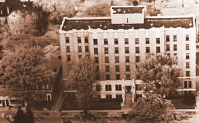
That day, nearly 800 employees made the move from the old seven-story McLeod Memorial Hospital to the modern McLeod Regional Medical Center. By 1 p.m. that day, all the patients — 71 adults and 20 infants and children — had been moved.
Patients were transported smoothly by local emergency service vehicles, area rescue squad back-up vans and a school bus. Patient families helped by moving patients who were mobile, nurses and staff worked overtime to lend a hand in the move, and later, T-shirts proclaiming, “I moved McLeod November 1979,” were distributed as mementos of the event.
Fraternity members from Francis Marion College, who had moved equipment every day during the week, were still there lending support and muscles. A bus from the college was used to transport mothers and their babies and children and patients from the McLeod Annex on Highway 52.
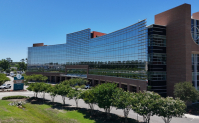
McLeod Regional Medical Center, dominated by bright, cheerful colors, skylights, and new equipment, was a 300- bed hospital with all private rooms to serve the 12 counties of the Pee Dee. New nursing techniques, equipment for patient care, and the advanced building system were all intended to provide high-quality care. At the McLeod Regional Medical Center dedication ceremony on the front lawn, South Carolina Governor Dick Riley delivered the address.
In November 1979, neurosurgery was first performed in the Pee Dee at McLeod Regional Medical Center. Shortly after, the McLeod Regional Medical Center opened its Neonatal Intensive Care Unit, the first and only Level III NICU in eastern South Carolina.
In May 1980, the McLeod Family Medicine Residency Program accepted its first class of physician residents, beginning a tradition of medical training that increases community access to medical services.
The development of the cancer program began to take shape in July of 1981 with the arrival of Dr. Michael D. Pavy, who came to McLeod after completing a fellowship in Medical Oncology at Johns Hopkins Hospital in Baltimore, Maryland.
After Dr Pavy began caring for patients at McLeod in the early 1980s, cancer research efforts were developed, a support system for patients and their families strengthened with hospital social workers assigned to cancer patients, and the hospital added hospice care and an apheresis program. As medical director, Dr. Pavy set about building upon existing services and establishing many new ones to form the McLeod Cancer Center that now exists.
Having a passion for research, Dr. Pavy also started the cancer research program at McLeod in the mid-1980s. The McLeod Cancer Research Department continues to offer national state-of-the-art cancer research trials for the prevention and treatment of cancer to eligible patients in the northeastern region of South Carolina.
In 1985, the first annual “A Light for Someone You Love” Hospice Tree Lighting Ceremony took place at McLeod Regional Medical Center.
Soon after, in 1986, the McLeod Foundation was established, with a mission to generate philanthropic support to perpetuate medical excellence at McLeod Health, and a vision to help provide the very best healthcare resources.
In October 1986, open heart surgery was performed for the first time in the Pee Dee at McLeod Regional Medical Center. The opening of the McLeod Heart Institute ushered in a new era in the care and treatment of heart disease.
As demands increased for hospital-to-hospital critical care transport, the McLeod HeartReach ambulance went on the road in 1990, bringing cardiac patients from outlying hospitals to McLeod for life-saving cardiac care.
Wilson Clinic and Hospital of Darlington was purchased by McLeod Health on May 1, 1994. The following year, an 18-bed Skilled Care Unit was dedicated in honor of Dr. Wilson and his contributions to the community of Darlington.
McLeod Health has always been dedicated to good stewardship, and due to increased access of these services locally, operations of McLeod Health Darlington were closed down in 2025.
In late 1997, Saint Eugene Community Hospital in Dillon became part of McLeod, expanding the scope of services available in the Dillon community and surrounding areas.
To unify its affiliates into a comprehensive, regional system, in 1988, McLeod announced a new corporate identity — McLeod Health. This new identity signified the organization’s commitment to amplify the stability and tenacity of an organization that has focused on its people and the well-being of our community.
In a significant recognition of its commitment to high-quality healthcare, McLeod Regional Medical Center received the prestigious South Carolina Governor’s Quality Award in 2000, highlighting the dedication to high standards in patient care and operational excellence.
Then in 2001, McLeod was selected as one of the only seven hospitals and health care organizations in the nation to lead improvements in health care quality. Pursuing Perfection: Raising the Bar for Health Care Performance was a $21 million initiative sponsored by the Robert Wood Johnson Foundation (RWJF) and the Institute for Healthcare Improvement (IHI). McLeod Health has been recognized numerous times for its outstanding work in quality care, best practices and clinical outcomes as well as its physicians' dedication to quality improvement. McLeod is constantly seeking to improve its patient care with efforts that are physician-led, data-driven and evidence-based.
In September 2003, McLeod Regional Medical Center opened the first and only permanently based Positron Emission Tomography (PET) imaging center in the Pee Dee. With this addition, physicians could better diagnose different types of cancer to determine the most beneficial treatment for patients. The technology also allowed for faster, more comfortable exams and better image quality, reducing radiation and patient claustrophobia for more detailed cancer and organ function assessments. This marked a significant imaging milestone for the state and community, providing local access to crucial diagnostic tools previously requiring travel, enhancing early disease detection, and improving patient care.
In 2004, the McLeod Breast Health Center was established to ensure rapid diagnosis, education and emotional support for women facing a diagnosis of breast cancer. Twenty years later, this team of providers continues to promote a continuity of care by offering the full spectrum of breast services from prevention and diagnosis to treatment and support. In 2010, the McLeod Breast Health Center was accredited by the National Accreditation Program for Breast Centers (NAPBC), a prestigious acknowledgement of the quality of care it offers to breast cancer patients. The Center is also a Designated Comprehensive Breast Imaging Center by the American College of Radiology.
McLeod Health opened a 12-bed Hospice House to provide hospice care close to home in 2005. Since its opening, the McLeod Hospice House now offers 24 inpatient rooms, two family comfort areas and a chapel.
A second meditation garden was also created adjacent to the additional patient rooms to offer patients and families an area of respite. The project was funded through philanthropic support. The McLeod Hospice House is currently the only inpatient hospice facility in the region.
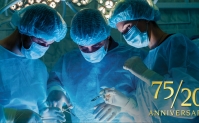
The seven-floor addition to the McLeod Pavilion housed the McLeod Center for Advanced Surgery, an institute designed to ensure patients have access to surgical services using the newest technology in an environment focused on safety and quality results.
Included as part of this center were: OR Suites, Anesthesia Care Units, Central Sterile Processing, Trauma Surgical Care Unit, Surgical patient rooms, Orthopedic/Neurosurgical patient rooms and a Rehab Gym.
The Operating Room of Tomorrow ensured patients had access to surgical services using the newest technology in an environment recognized nationally for safety and quality results.
In 2008, McLeod Health unveiled the McLeod Mobile Mammography Unit, the first of its kind for the northeastern region of South Carolina and the first digital mobile mammography unit in the state. Each week the Mobile Mammography Unit travels to businesses, industries, healthcare facilities and health fairs to improve access to screening mammograms.
The McLeod Mobile Mammography Unit is part of the continued commitment of McLeod Health to women from the Midlands to the Coast. Accredited by the American College of Radiologists, the unit was purchased by the McLeod Health Foundation through funds donated by generous supporters.
To meet the needs of the growing community and increase access to healthcare services, the McLeod Urgent Care Centers opened its Florence location in 2008 and the Darlington location in 2013.
In 2010, McLeod Health received the American Hospital Association-McKesson Quest for Quality Prize, awarded annually to one hospital in the country. McLeod was the first hospital in South Carolina to receive this prestigious honor since the inception of the national Quest for Quality Prize in 2002. Among decades of recognition, this was a premiere designation for McLeod Health.
In 2011, McLeod Health expanded into Horry County with the addition of Loris Community Hospital and Seacoast Medical Center as part of the healthcare system.
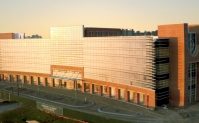
In 2013, the McLeod Center for Intensive Care opened in Florence, increasing the total number of intensive care beds to 97. The two identical curved, seven-story buildings are nestled between the McLeod Tower and McLeod Pavilion, and include the trauma surgical care unit for serious accidents or complicated surgery recovery; medical intensive care unit for acute illness recovery; coronary care unit, specially equipped to treat serious heart conditions; and the hemodialysis unit for treatment of chronic kidney disease and acute renal failure and telemetry for monitoring patient heart activity.
As “the cancer hospital” for the region, the oncology team was pleased McLeod Health made the commitment to unify and improve upon the care of their patients by opening the McLeod Center for Cancer Treatment & Research in Florence in late 2013.
The Cancer Center serves as a focal point for the next generation of cancer care in our region, providing patients and their families with the highly sensitive, sophisticated and personal care they expect and deserve. It offers additional space with the patient’s comfort in mind, expanded access to preventative medicine, individualized treatment focusing on each patient’s diagnosis, care and recovery, as well as state-of-the-art technology.
After the hospital underwent a series of ownership changes, Chesterfield General Hospital officially started operating as McLeod Health Cheraw in mid-2015. Now serving Chesterfield, Marlboro and surrounding counties, McLeod Health Cheraw continues adding new services and specialists while continuing to offer excellent patient-centered care.
In a continuing effort to support high quality and accessible regional health services, McLeod Health and Clarendon Health System announced an agreement to affiliate and operate Clarendon Health System in Manning, SC on May 25, 2016.
The organization has grown throughout the century, from an infirmary to seven hospitals, more than 1,000 physician practices and quality care for the health of residents from the Midlands to the Coast.
In 2016, a marker from the South Carolina Department of Archives and History was unveiled on the 100 Block of West Cheves Street at the site of the original McLeod Infirmary in 1906.
The facility was a result of the compassion and vision of Dr. F. H. McLeod. His dream was the catalyst to improve medical options, superlative treatments and provide access to the best in medicine for the benefit of our patients in the past, present and for decades to come.
The two-sided marker bears the inscription:
The McLeod Infirmary was located here in 1906, inspired by the need to provide access to local medical and surgical care for the people of the region. Frank Hilton McLeod was born in Richmond County, N.C. in 1868 and graduated from the University of Tennessee Medical School. In 1891, he moved to Florence and chartered the Florence Infirmary. By the 1920s it was the third largest hospital in the state.
In 1930, with the assistance of the Duke Endowment, McLeod Infirmary became a non-profit institution.
A new building opened in 1935 and expanded capacity to 190 beds. Renamed McLeod Memorial Hospital in 1971, expansion continued when 14 blocks of Urban Renewal land were acquired just east of this location. The McLeod Regional Medical Center opened in 1979 with over 300 beds and improved acute care facilities.
This marker is the first to be placed in the core of the revitalization of downtown Florence.
On March 29, 2017, McLeod hosted an open house and ribbon cutting at the new McLeod Health Medical Office Building at Carolina Forest. This installment signified the hospital’s commitment to provide treatment, services and health care to the people of Horry County.
This facility was the initial phase of development of the McLeod Health Carolina Forest campus.
On April 28, 2017, McLeod Cardiology Associates expanded to Sumter. An open house and ribbon cutting was held in conjunction with the Greater Sumter Chamber of Commerce.
On January 2, 2018, McLeod Health opened a Medical Park in Hartsville, located at 1319 South Fourth Street. Services at this location include McLeod Orthopaedics, McLeod Cardiology Associates, McLeod Vascular Associates, McLeod Sports Medicine and McLeod Rehabilitation Services.
McLeod Health expanded its nationally recognized surgical program to include robotic-assisted surgery in 2017. Surgery, like all fields of medicine, is forever changing. There are choices for patients: traditional open surgery, minimally invasive laparoscopic surgery or robotic-assisted surgery. Robotic-assisted surgery is a form of minimally invasive surgery. It allows the surgeon to perform many types of complex procedures with more precision, flexibility and control than is possible with traditional techniques.
In all surgical cases, superlative outcomes are based on the skills and expertise through the hands of a great surgeon.
In 2017, a new Electrophysiology Laboratory opened at McLeod Regional Medical Center for Electrophysiology studies and procedures. McLeod Electrophysiologists can capture 3D images of the heart, examine the heart's electrical system and detect heart rhythm irregularities while offering patients the lowest possible radiation dose and excellent image quality.
In 2018, McLeod Medical Park Five opened on the campus of McLeod Regional Medical Park, home to McLeod Orthopaedics, the McLeod Outpatient Surgery Center and OrthoNOW.
McLeod Health Seacoast opened its new patient tower in September 2018 following the completion of a $110 million expansion that more than doubled its patient capacity, transforming the delivery of medical care to the community.
The expansion of the patient tower allows McLeod Health Seacoast to increase its bed capacity and create a hospital experience designed for the patient and their families. The building also meets new sustainability standards and increases modern efficiencies. The expansion added 55 beds, bringing total capacity to 105 beds.
Six new operating rooms escalated the total operating room capacity to 10 rooms. Other significant improvements included a new Outpatient Pharmacy, Outpatient Rehabilitation Department, diagnostic Cardiac Catheterization Lab and Electrophysiology Lab.
Expanded outpatient services included a Women’s Breast Health Center with 3D mammography and stereotactic breast biopsy capabilities. In 2020, McLeod Regional Medical Center received a $750,000 grant from the U.S. Department of Health and Human Services, through the Health Resources and Services Administration (HRSA), to develop new rural residency programs. McLeod Regional Medical Center, the only grant recipient in the state of South Carolina, would also achieve accreditation of its program through the Accreditation Council for Graduate Medical Education.
The result was the establishment of the McLeod Family Medicine Rural Residency Program with sites in the rural South Carolina communities of Cheraw and Manning. The program expanded much needed access to physicians, enhanced recruitment efforts and afforded physicians the opportunity to practice medicine in a small community setting.
In 2021, McLeod Regional Medical Center opened McLeod Pavilion East, located between McLeod Pavilion Tower and Medical Park East.
McLeod Pavilion East is home to the new McLeod Regional Medical Center Emergency Department, Advanced Endoscopy and Recovery area, Neonatal Intensive Care Unit (NICU), and Postpartum and Gynecological Services.
In May 2022, McLeod Health unveiled a historical marker in front of the home of its founder, Dr. F.H. McLeod.
As the new and very fitting remodeled home for the McLeod Health Foundation, this site represented more than just a reflection of the past. Our location for the vital services and support of the Foundation underscores our McLeod Health commitment to the community of Florence and investment in the downtown area.
The two-sided historical marker, coordinated with the South Carolina Department of Archives and History, bears the inscription:
The Frank Hilton McLeod home was constructed in 1919 during the expansion of the Florence Infirmary. McLeod founded the Infirmary in 1906 on West Cheves Street, adjacent to his personal residence. To allow for the expansion McLeod moved his wooden frame home to this site.
He and his wife Carolina Nelson McLeod (1878-1952) lived in the frame house where it stood until the brick residence was completed here at the corner of Palmetto and Dargan Streets.
While living here, F. H. McLeod oversaw the Infirmary’s growth into one of the largest hospitals in the state, serving patients from around the Pee Dee. The residence was sold in 1940 and reacquired in 1999 by McLeod Regional Medical Center, the successor to the Florence Infirmary.
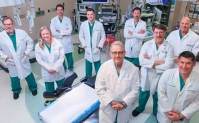
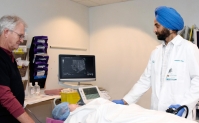
In January 2024, the McLeod Heart and Vascular Institute combined the skills of Structural Heart Cardiologists Dr. Ravi Parikh and Dr. Brian Blaker with Cardiothoracic Surgeon Dr. Srinivas Kolla to repair a patient’s severely leaking aortic heart valve. This surgery, as it was performed, was a first-time procedure in South Carolina. Structural heart procedures emphasize a team effort. This particular case could not have been accomplished without the physicians and staff working together for the benefit of the patient.
All of the team members bring their experience and expertise for the best care of the patient.
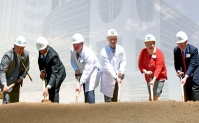
McLeod Health, a leading healthcare provider in the region, celebrated a momentous occasion on April 22, 2024, as it unveiled plans for the new state-of-the-art hospital at the McLeod Health Carolina Forest Campus.
The groundbreaking event marked the beginning of construction for a four-story, 48-bed facility that will serve the growing population of Horry County and the Grand Strand area. This will be the first new hospital built in Horry County since McLeod Health Seacoast opened in 2011.
The Carolina Forest campus is envisioned to offer a wide range of health services that will provide the emergent, primary, specialty and inpatient care that patients need. McLeod Health will be the only healthcare system building a continuum of care, with specialty services at all three Horry County hospitals – McLeod Health Seacoast, McLeod Health Loris and McLeod Health Carolina Forest. Together, these campuses seek to provide quality care at a convenient location for patients in Horry County.
In 2025, McLeod Health announced the opening of a new office location for McLeod Primary Care Lake City, continuing McLeod Health’s commitment to Lake City and lower Florence County.
McLeod Primary Care Lake City was established in October 2022 and continues to deliver the highest-level care to patients and the Lake City community with access to the extensive services of McLeod Health.
McLeod Health continued its Horry County expansion with the opening of the McLeod Health Carolina Forest Surgery Center on Tuesday, April 1, 2025. The McLeod Health Carolina Forest Surgery Center is in Building 3 on the McLeod Health Carolina Forest campus near the intersection of International Drive and Highway 31.
The new 20,000-square-foot facility is the largest outpatient surgery center in Horry County. The marks a significant milestone in the development of a new hospital on the McLeod Health Carolina Forest campus, which is expected to be completed by Fall. 2026.
May 2025 was a pivotal moment in the McLeod Health Cancer Program with the opening of the first Comprehensive Cancer Center in Horry County, where all cancer treatment services are located under one roof. This new Cancer Center is a continuation of professionalism, expertise and commitment established five decades ago at the McLeod Center for Cancer Treatment and Research in Florence.
The state-of-the-art facility has been designed to prioritize convenience for patients and their families while providing the advanced cancer care they need. Services in the new Cancer Center include medical oncology, chemotherapy/immunotherapy treatment, radiation oncology, genetic testing and research.
McLeod Health continued its expansion of physician residency programs with the establishment of the McLeod Internal Medicine Residency Program and McLeod Internal Medicine Residency Center in 2025.
This new physician practice expands access to internal medicine care across our region and will serve as the training ground for the McLeod Internal Medicine Residency Program, which will welcome its first class of residents in July 2026.
On December 11, 2025, a ribbon cutting and open house for the Poynor School of Healthcare Innovation was held. The new School of Innovation, a partnership with McLeod Health and Florence 1 Schools, is designed for high school juniors and seniors interested in pursuing healthcare careers.
Located in the newly reopened historic Poynor Building in downtown Florence, the program provides students with hands-on healthcare education and training that prepare them for immediate career opportunities after graduation or continued study in college-level healthcare programs.
On January 30, 2026, McLeod Health unveiled plans for a new state-of-the-art hospital with a groundbreaking at McLeod Health Cheraw. The hospital is designed to expand the delivery of high-quality health care in Chesterfield and Marlboro counties and reinforces McLeod Health Cheraw as the model and destination for inpatient acute care and outpatient services in the region.
In Spring 2026, McLeod Family Medicine Kingstree and McLeod Primary Care Myrtle Beach moved to new facilities, designed to provide convenient, high-quality primary care to both the Williamsburg County and Grande Dunes communities.
When most organizations cease to exist in the years following the leadership and vision of their founder, McLeod has exceeded the boundaries of superlative patient care, continuing to be led by our physicians, healthcare professionals and dedicated people since its establishment in 1906.
From the beginning, our founder, Dr. F.H. McLeod, was led by a passion to comfort or cure. He initiated a movement dedicated to a mission of improving the lives and well-being of others, demonstrated through the four core values of Caring, a respect for the Person, and a commitment to Quality and Integrity.
According to the U.S. Census, less than one-half of a percent of all the businesses in the country today have existed for more than 100 years.
And yet, McLeod Health this year turns 120 years old, more than 70 years after the death of Dr. McLeod, steadfast through both challenging times and progressive change.
With the simple seeds of quality, compassion and innovation, a surgeon sowed what has grown to become the region's premiere medical center.
Serving more than 1,000,000 people across 18 counties in South Carolina and North Carolina, McLeod Health spans seven hospitals and more than 100 physician locations.
McLeod Health’s growth is a testament to the unwavering dedication of our people – more than 18,000 team members; 1,700 medical providers; and 3,800 licensed nurses.
Every innovation, every milestone and every life touched has been made possible by those who serve with compassion, skill and integrity.
McLeod Health stands tall as a trusted and enduring place of healing.
Not just for today. Not just for tomorrow. For all time.
McLeod Health continuously strives to fulfill Dr. McLeod's vision of excellence by following his early examples and focusing on his simple, yet undying values. We think he would have been pleased.
-
McLEOD REGIONAL MEDICAL CENTER FLORENCE
843-777-2000 -
McLEOD DARLINGTON
843-777-1100 -
McLEOD DILLON
843-774-4111 -
McLEOD LORIS
843-716-7000 -
McLEOD SEACOAST
843-390-8100 -
McLEOD CHERAW
843-537-7881 -
McLEOD CLARENDON
803-433-3000



-
McLEOD REGIONAL MEDICAL CENTER FLORENCE
843-777-2000 -
McLEOD DARLINGTON
843-777-1100 -
McLEOD DILLON
843-774-4111 -
McLEOD LORIS
843-716-7000 -
McLEOD SEACOAST
843-390-8100 -
McLEOD CHERAW
843-537-7881 -
McLEOD CLARENDON
803-433-3000
