 Find a Doctor

 Locations
 Services

You Inspire The Best in Us.
With the many advances in care and treatments, today’s patients have more and more reasons to expect the best outcomes. Here are the incredible stories of our patients and their journeys. Click on a thumbnail and scroll down to view each story.





































Doubling Down on Diabetes
By Jessica Wall
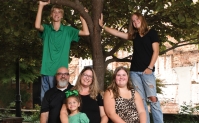
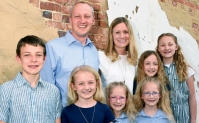
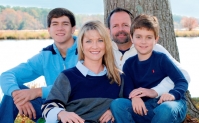
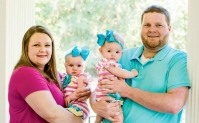
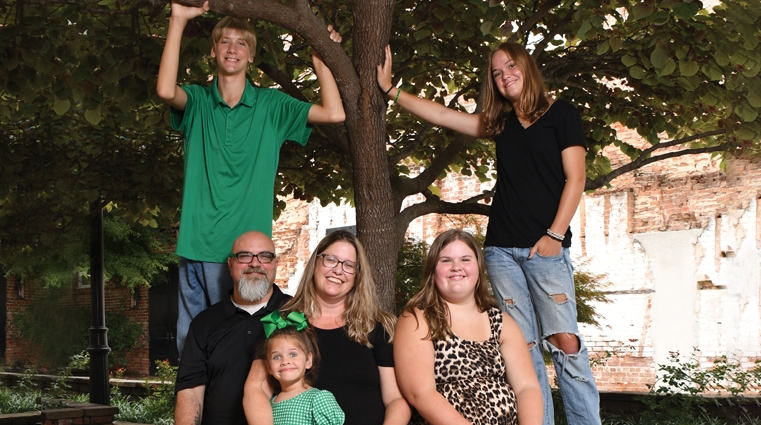
“Your daughter has type 1 diabetes.” Theresa Long can still recall her disbelief when she heard these words from an Emergency Department physician four years ago. She and her husband Michael had taken their nine-year-old daughter Abigail to McLeod Regional Medical Center after a minor accident at home.
While performing a routine check-up, doctors discovered that her blood sugar level was above 700. A blood sugar level less than 140 is considered normal.
Abigail was then admitted to McLeod Children’s Hospital.
“It was totally a God thing,” explains Theresa. “Had it not been for her accident, we would have never known about her diabetes.”
“I remember feeling so many emotions,” recalls Abigail. “I felt nervous, confused and scared because I knew nothing about diabetes. I was disappointed in myself because I thought it was my fault, which I now know is not true.”
While in the hospital, Abigail learned a great deal from her care team about how to manage her diabetes, including giving herself insulin injections. Upon discharge, Abigail was connected with Lisa Woodberry, FNP, of McLeod Pediatric Endocrinology, for the management of her diabetes.
Six months later, Theresa and Michael noticed their youngest child, Faith, chugging water and experiencing increased urination. Now armed with testing materials at home, they discovered that Faith’s blood sugar level was 500 and rushed her to the hospital for an official diagnosis. Testing confirmed that their 15-month-old had type 1 diabetes as well.
Type 1 diabetes is an autoimmune condition that causes the insulin-producing cells (beta cells) in the pancreas to shut down. Once these cells shut down, the patient will require insulin replacement. It is commonly diagnosed in children and young adults under age 20. It is estimated that 80,000 children develop diabetes each year. The symptoms of type 1 diabetes in a child are weight loss, increased thirst, increased urination and vomiting.
It is rare that siblings are affected. McLeod Pediatric Endocrinology follows only about five sibling groups.
“That was a crazy year for the Long family,” recalls Theresa. “We are so thankful for Lisa and her entire team. She has supported us every step of the way. I never have to worry when Lisa is involved, and we consider her part of our family. My girls are genuinely excited for their appointments.”
Because of the McLeod Health mission to provide specialized care for children close to home, the hospital offered everything the Long family did not know they needed.
“It is such a relief knowing that this level of care is right here,” says Theresa. “As a mom of four, it can be challenging to travel for this ongoing care every few months.”
Lisa explains that when a patient is first diagnosed with type 1 diabetes, they undergo frequent visits for several months. Once patients are self-sufficient with their care, follow up is expanded to every three months. “We also may see them between appointments if they are having problems. In addition, we often follow up by phone to review blood sugar levels or make insulin adjustments.”
There are also times when patients with diabetes need to be admitted to the hospital for more extensive care. Thankfully, McLeod Children’s Hospital has both a pediatric floor and a Pediatric Intensive Care Unit (PICU) to serve patients with various medical needs.
“Usually when the girls are sick and unable to keep food down, their blood sugar levels stay low and require a hospital admission,” explains Theresa.
“On one occasion, Abigail was so sick she stayed in the PICU until her blood sugar levels stabilized.”
Now 14 and five years old, Abigail and Faith are navigating their type 1 diabetes journeys with strength and determination.
Faith is enrolled in 5K, and Theresa and Lisa work closely with the school nurses to develop the best routine for her.
Abigail continues to play an active role in managing her diabetes, though she has faced challenges along the way.
One of those was the honeymoon phase, which does not happen to every patient. This most commonly occurs within a few months after diagnosis but can occur anytime. During this period, the pancreas appears to be making a little bit of insulin before it completely shuts down. It is common to need much less insulin than is usually required. This phase can last a few weeks up to a few months.
Despite her challenges, Abigail shows a resilience beyond her years. She is active in sports and loves singing and dancing. She also looks forward to Camp Adam Fischer, which she describes as the “best diabetes camp ever.” This summer camp is for children diagnosed with type 1 diabetes and allows them to enjoy normal activities while providing parents with the comfort of knowing that their diabetes is being well-managed.
With technological advancements in diabetes care, both Abigail and Faith wear continuous glucose monitors so Theresa can have constant access to their numbers. The peace of mind this brings is priceless.
“This journey has certainly increased our faith in God,” explains Theresa. “I have confidence in Abigail’s ability to manage her diabetes, and I know that Faith will be okay. We have technology and tools to help us live normal lives while knowing that everyone is healthy. Our motto is, ‘we manage diabetes; diabetes does not manage us.’”
“Faith and Abigail amaze me,” says Lisa. “They have learned to live a normal life and not let their diabetes slow them down at all. They have amazing parents who supervise them and alert us if they need anything. Because Abigail is older, she has stepped up and tried to do her care on her own. I am so proud of her. They both wear the most up-to-date technology to care for their diabetes and try to keep their sugars controlled. The best thing about both girls are their precious personalities and ability to fight diabetes with smiles on their faces.”
-
McLEOD REGIONAL MEDICAL CENTER FLORENCE
843-777-2000 -
McLEOD DARLINGTON
843-777-1100 -
McLEOD DILLON
843-774-4111 -
McLEOD LORIS
843-716-7000 -
McLEOD SEACOAST
843-390-8100 -
McLEOD CHERAW
843-537-7881 -
McLEOD CLARENDON
803-433-3000



-
McLEOD REGIONAL MEDICAL CENTER FLORENCE
843-777-2000 -
McLEOD DARLINGTON
843-777-1100 -
McLEOD DILLON
843-774-4111 -
McLEOD LORIS
843-716-7000 -
McLEOD SEACOAST
843-390-8100 -
McLEOD CHERAW
843-537-7881 -
McLEOD CLARENDON
803-433-3000
