 Find a Doctor

 Locations
 Services

You Inspire The Best in Us.
With the many advances in care and treatments, today’s patients have more and more reasons to expect the best outcomes. Here are the incredible stories of our patients and their journeys. Click on a thumbnail and scroll down to view each story.













Small Clip = Big Repair
By Tammy White
Living with heart disease can make daily activities more difficult and affects every aspect of one’s life -- physically, mentally and emotionally. With this in mind, the physicians and care teams at McLeod Health constantly seek innovative solutions and alternatives that allow patients to embrace life fully.
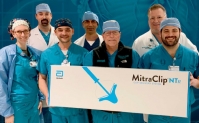
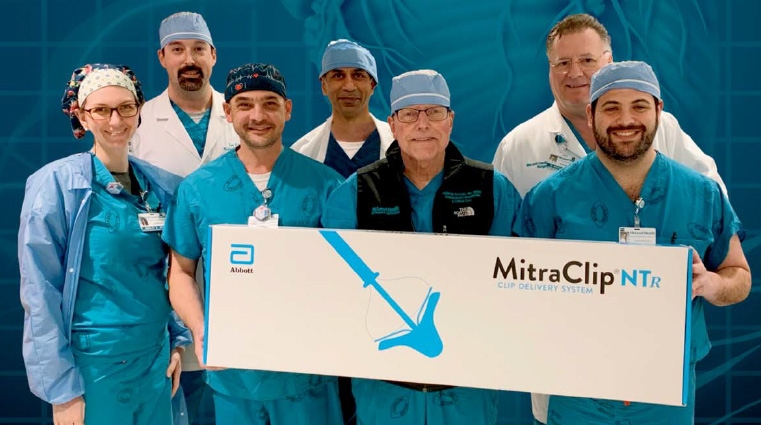
The McLeod Heart and Vascular Institute leads the way in the region with advanced therapy and treatment for valvular heart disease with the introduction of MitraClip, a minimally-invasive therapy to treat mitral regurgitation, also known as a leaking heart valve.
The heart has four valves, which are like one-way doors, key to directing blood flow properly through the heart. One of those valves, the mitral valve, has two leaflets, or flaps, that open and close to ensure blood travels in only one direction within the heart.
“Approximately one in ten adults age 75 and older in the United States have some degree of mitral regurgitation,” said Dr. Brian Blaker, McLeod Interventional Cardiologist. “The prevalence and severity of mitral regurgitation increases with age, although it can affect adults of all ages.
Some of the common causes include congestive heart failure, coronary artery disease, mitral valve prolapse, rheumatic heart disease, connective tissue disease, and radiation exposure.”
Over time, the flaps can become worn and no longer seal completely, allowing blood to leak backward. As a result, the heart must work harder to push blood through the body.
Common symptoms patients with mitral regurgitation experience include fatigue, shortness of breath, coughing and an irregular heartbeat. You may also have an extra heart sound, known as a heart murmur, that is produced when blood flows turbulently or in the wrong direction.
“Our treatment goals focus on decreasing the severity of mitral regurgitation, lessening strain on the heart and improving quality of life for patients experiencing these symptoms,” said Dr. Blaker. “Medications may help the symptoms, but they cannot mend the damaged valve.”
The current standard to repair a severely leaking mitral valve remains open-heart surgery by either replacing the valve with an artificial valve or repairing the existing mitral valve. However, in patients who continue to have symptoms despite medical therapy and are not good candidates for surgery, a less invasive mitral valve repair with MitraClip may be a safe and effective alternative to open-heart surgery.
A specialized team consisting of an interventional cardiologist, a cardiothoracic surgeon and a cardiac anesthesiologist, work together to determine a patient’s eligibility for this procedure. Tests to measure the size of the valve help the team establish if the MitraClip is a good option for treatment.
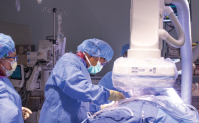
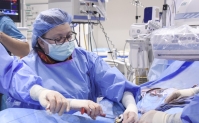
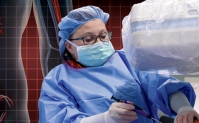
Performed in a cardiac catheterization laboratory, this procedure uses X-ray imaging and ultrasound technology to deliver the MitraClip to the correct position in the heart via a catheter through a blood vessel in the leg. Once in place, the clip attaches to the mitral valve leaflets, fastening them together. This improves the closure of the valve and reduces the backflow of blood.
“With the MitraClip, more patients will experience improvements in their symptoms, a decreased chance of being hospitalized and an improved quality of life,” said Dr. Blaker.
-
McLEOD REGIONAL MEDICAL CENTER FLORENCE
843-777-2000 -
McLEOD DARLINGTON
843-777-1100 -
McLEOD DILLON
843-774-4111 -
McLEOD LORIS
843-716-7000 -
McLEOD SEACOAST
843-390-8100 -
McLEOD CHERAW
843-537-7881 -
McLEOD CLARENDON
803-433-3000



-
McLEOD REGIONAL MEDICAL CENTER FLORENCE
843-777-2000 -
McLEOD DARLINGTON
843-777-1100 -
McLEOD DILLON
843-774-4111 -
McLEOD LORIS
843-716-7000 -
McLEOD SEACOAST
843-390-8100 -
McLEOD CHERAW
843-537-7881 -
McLEOD CLARENDON
803-433-3000
