 Find a Doctor
 Locations
  Services
You Inspire The Best in Us.
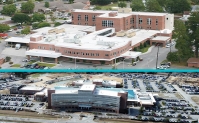
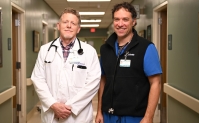
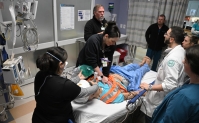
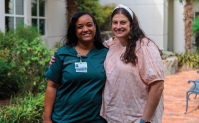
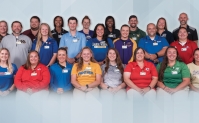
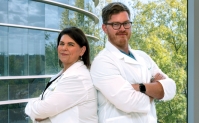
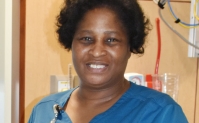
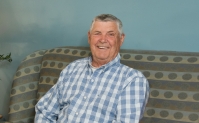
With the many advances in care and treatments, today’s patients have more and more reasons to expect the best outcomes. Here are the incredible stories of our patients and their journeys. Click on a thumbnail and scroll down to view each story.









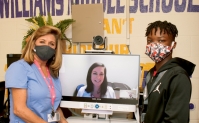
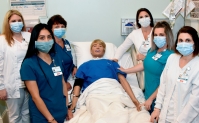





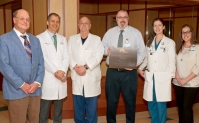




Partnering For a Healthier Community
By Jamie Hayes
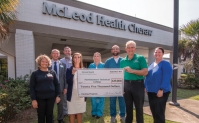
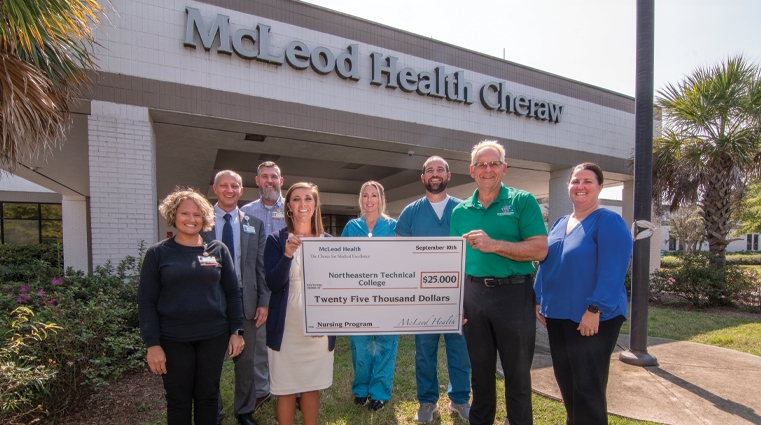
Since 2004, McLeod Health has partnered with Northeastern Technical College (NETC) to expand nursing education opportunities in the rural areas it serves, including Dillon, Chesterfield and Marlboro Counties.
NETC’s Dillon campus was built in 2003, with an expansion in 2011, to accommodate additional programs and a growing student population. McLeod Health Dillon partners with McLeod Health Cheraw annually to contribute to the NETC Nursing programs in their respective areas. In early 2024, McLeod Health Dillon announced it would house NETC’s new Licensed Practical Nursing (LPN) program right on the hospital campus.
The program will launch in Spring 2025.
“We are excited to have the LPN students on our campus,” said Jenny Hardee, CEO of McLeod Health Dillon. “We hope to gain the students as employees once they finish their studies.”
The students may complete their clinical rotations at McLeod Health Dillon, offering a firsthand campus experience.
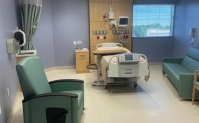
Nursing Simulation Lab beds and mannequins are in place at the Dillon site, as well as a computer lab and classroom area. The training site will be fully staffed when the program begins.
Nursing represents the nation's largest healthcare profession and the largest single component of hospital staff.
By 2030, South Carolina will be one of four states with a nursing shortage of over 10,000, according to an analysis by the US Department of Health and Human Services. Additional nurses will be needed to care for the aging population, who typically have more medical problems than younger people.
"The need for healthcare services is increasing as the number of aging baby boomers continues to grow," stated Kasey Bustamante, Chief Nursing Officer for McLeod Health Dillon. "As a result, more nurses are needed to educate and care for patients than ever before. It is crucial for our healthcare organization to support NETC so we can continue to educate nurses for years to come."
According to Bustamante, nurses serve an important role in the delivery of quality healthcare.
"McLeod Health recognizes the value of our nurses’ contributions in patient care," she said. "Nurses do so much to keep operations running smoothly and efficiently in our hospitals. Providing patient advocacy, promotion of a safe environment, participation in shaping health policies, and patient education are also key nursing roles. With competent nurses as part of the medical team, McLeod Health continues to provide quality healthcare for patients in the region.”
"Nurses are essential to healthcare and our rural economies. We are fortunate to have access to the high-quality nursing education program available at NETC," said Hardee. "We rely on each graduating class for their well-educated, qualified candidates."
The partnership is mutually beneficial.
Dr. Kyle Wagner, President of Northeastern Technical College, underscores how the contribution from McLeod Health is vital for advancing health education and healthcare in rural communities throughout the state.
"We are grateful for the continuous support of McLeod Health," said Dr. Wagner.
"McLeod is making nursing degrees a reality for hundreds of students in our rural area. Their willingness to share facilities and provide staff for clinical work has been a critical element in supporting the community's healthcare needs and the growth of our health sciences programs at NETC. McLeod is a great employer and an asset to our rural community by bringing valuable careers to many of our graduates. We look forward to continuing to grow and expand our partnership in the many years ahead."
"McLeod Health has a rich history of support for local nursing programs. The continued partnership between McLeod and NETC has been successful because we are working together to reach common goals,” added Hardee. “Together, we will equip our community with local, skilled nurses who can continue to work close to home.”
-
McLEOD REGIONAL MEDICAL CENTER FLORENCE
843-777-2000 -
McLEOD DARLINGTON
843-777-1100 -
McLEOD DILLON
843-774-4111 -
McLEOD LORIS
843-716-7000 -
McLEOD SEACOAST
843-390-8100 -
McLEOD CHERAW
843-537-7881 -
McLEOD CLARENDON
803-433-3000



-
McLEOD REGIONAL MEDICAL CENTER FLORENCE
843-777-2000 -
McLEOD DARLINGTON
843-777-1100 -
McLEOD DILLON
843-774-4111 -
McLEOD LORIS
843-716-7000 -
McLEOD SEACOAST
843-390-8100 -
McLEOD CHERAW
843-537-7881 -
McLEOD CLARENDON
803-433-3000