 Find a Doctor
 Locations
  Services

 Print This Page
 The McLeod Healthy Lungs Initiative Improves Lung Cancer Outcomes
Medically Reviewed by Srinivas Kolla, MD
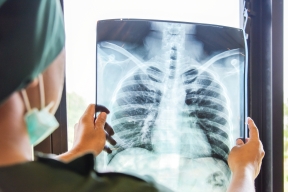
Early detection is one of the most powerful tools in the fight against lung cancer. Dr. Srinivas Kolla, a McLeod Cardiothoracic Surgeon, explains how new approaches — including low-dose CT scans and the McLeod Healthy Lungs Initiative — are changing outcomes for patients across the region.
Shifting the Stage at Diagnosis
“Simply put, low-dose CT scans identify lung cancers sooner,” says Dr. Kolla. “With the help of AI software, we can review CT scans, identify suspicious lesions, and decide whether a patient needs early diagnosis and treatment or continued follow up.”
That change has had a dramatic impact. “Two years ago, we were detecting more late-stage lung cancers than early-stage lung cancers. Now we are in the exact opposite direction, where the ratio is about two to one in favor of early detection. So, the McLeod Healthy Lungs Initiative and the lung cancer screenings has allowed us to improve early detection, which means starting treatment sooner, and that results in increased survivability.”
The Role of the Healthy Lungs Initiative
Dr. Kolla credits the McLeod Healthy Lungs Initiative and its collaborative model. “We have tumor boards with medical oncology, radiation oncology, pulmonary medicine, radiology, and pathology. My colleague, Dr. Vinod Jona, also leads a dedicated nodule conference, where we review cases and determine treatment plans together.”
He calls it “coordinated care in lung cancer” — a model that is rare outside of large academic centers. “In my 25 years of practice, I’ve never seen it executed as well as here at McLeod. It’s a dedicated, bright group of colleagues all focused on the same goal: taking care of patients with lung cancer. To me, it feels like caring for a hard disease amongst friends.”
Reducing Your Risk
While screenings are vital, prevention is equally important. “Smoking is the biggest initiator of lung cancer,” Dr. Kolla emphasizes. “Quitting tobacco at any stage reduces the risk of recurrence or developing a second cancer.” Along with smoking cessation, he encourages healthy living and heart health practices as critical ways to avoid seeing a cardiothoracic surgeon in the future.
-
McLEOD REGIONAL MEDICAL CENTER FLORENCE
843-777-2000 -
McLEOD DARLINGTON
843-777-1100 -
McLEOD DILLON
843-774-4111 -
McLEOD LORIS
843-716-7000 -
McLEOD SEACOAST
843-390-8100 -
McLEOD CHERAW
843-537-7881 -
McLEOD CLARENDON
803-433-3000



-
McLEOD REGIONAL MEDICAL CENTER FLORENCE
843-777-2000 -
McLEOD DARLINGTON
843-777-1100 -
McLEOD DILLON
843-774-4111 -
McLEOD LORIS
843-716-7000 -
McLEOD SEACOAST
843-390-8100 -
McLEOD CHERAW
843-537-7881 -
McLEOD CLARENDON
803-433-3000