 Find a Doctor
 Locations
  Services

 Print This Page
 Minimally Invasive Bunion Surgery: Benefits, Procedure, and Recovery
Medically Reviewed by Paul J. Weatherby, MD
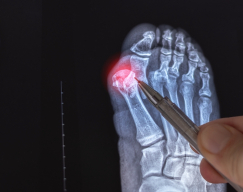
Bunions are one of the most common, and often painful, foot deformities. They are characterized by a bony bump forming on the inside of the big toe. Over time, the deformity can worsen, causing the big toe to angle inward toward the other toes. This leads to discomfort, swelling, difficulty wearing shoes, and in more severe cases, trouble walking or standing for long periods.
Bunions develop gradually, typically due to a combination of factors including genetics, structural foot issues, and wearing shoes that compress the toes. Problems with the way your feet are shaped, such as having flat feet, can also increase the risk of developing bunions. While bunions can affect anyone, they are especially common in women and older adults, most often due to changes in foot structure over time.
Early treatment often includes conservative measures such as wearing wider shoes, using toe spacers or bunion splints, taking anti-inflammatory medications, and using orthotics to support the foot’s alignment. When these options no longer provide relief, surgery may be recommended.
Minimally invasive bunion surgery is a modern surgical approach designed to correct the deformity through several very small incisions, usually less than one centimeter. This technique realigns the toe and removes the bony prominence while minimizing disruption to surrounding soft tissue. Compared to traditional open surgery, this method typically results in less swelling, reduced pain, and a faster recovery.
During the procedure, the surgeon uses specialized tools to carefully reposition the bones in the foot. Once realigned, the bones are held in place using small screws or other fixation devices that remain inside the foot. The minimally invasive approach is precise and efficient, which helps preserve the integrity of surrounding muscles, ligaments, and skin.
Candidates for minimally invasive bunion surgery typically have mild to moderate bunion deformities that cause pain which interferes with daily activities and have not improved with conservative treatment options. This procedure is especially appealing for patients seeking a shorter recovery timeline, less downtime, and minimal scarring.
Recovery usually involves wearing a specialized boot or stiff-soled shoe for about four to six weeks to protect the correction and allow healing. Patients begin gradual weight-bearing as tolerated. Physical therapy may be recommended to restore strength, balance, and range of motion. Most individuals can return to normal footwear and activities within six to eight weeks, with full recovery taking 3-6 months. Returning to high-impact activities may require more time.
While minimally invasive bunion surgery offers many benefits, it is important to recognize that not every bunion requires surgery. Mild cases and painless bunions often respond well to non-surgical measures, and the decision to proceed with surgery should be based on symptoms, function, and overall foot health. For those with significant pain and deformity, surgery can significantly improve comfort, alignment, and overall quality of life.
Dr. Paul Weatherby performs surgeries and procedures at McLeod Regional Medical Center in practice with McLeod Orthopaedics. Dr. Weatherby provides care for the full scope of foot and ankle orthopedic needs, including Achilles Repair, Ankle Ligament Reconstruction, Ankle Scope (Arthroscopy), Ankle Replacement and Fusion Surgery, Fracture Repair, Hammertoe Correction, Morton’s Neuroma Excision, and more. For more information, please call 843-777-7900.
-
McLEOD REGIONAL MEDICAL CENTER FLORENCE
843-777-2000 -
McLEOD DARLINGTON
843-777-1100 -
McLEOD DILLON
843-774-4111 -
McLEOD LORIS
843-716-7000 -
McLEOD SEACOAST
843-390-8100 -
McLEOD CHERAW
843-537-7881 -
McLEOD CLARENDON
803-433-3000



-
McLEOD REGIONAL MEDICAL CENTER FLORENCE
843-777-2000 -
McLEOD DARLINGTON
843-777-1100 -
McLEOD DILLON
843-774-4111 -
McLEOD LORIS
843-716-7000 -
McLEOD SEACOAST
843-390-8100 -
McLEOD CHERAW
843-537-7881 -
McLEOD CLARENDON
803-433-3000