 Find a Doctor
 Locations
  Services

 Print This Page
 Back Pain Explained: From Conservative Care to Surgery
Medically Reviewed by Miranda Hayworth, MD
Dr. Miranda Hayworth, a neurosurgeon with Florence Neurosurgery and Spine at McLeod Health, answers some important questions about back pain.
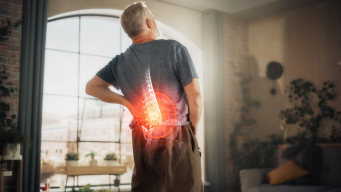
Back pain is one of the most common reasons people seek medical care—and for many, it’s something they’ve experienced at least once in their lives. In many places, back pain is second only to coughs and colds as a cause of doctor visits. It shows up everywhere, from primary care offices to emergency departments, and while it’s often manageable, knowing when to seek care is key.
Will back pain go away on its own?
In many cases, back pain can improve on its own, especially when it’s caused by muscle strain, minor injury, or poor posture. However, complete bedrest is rarely the answer. Staying in bed for more than a few days can actually make symptoms worse by leading to stiffness, muscle weakness, and increased pain.
Instead, early treatment often focuses on conservative management, including:
- Pain medications or muscle relaxants
- Physical therapy
- Activity modification, rather than prolonged rest
- Epidural steroid injections, when appropriate
These approaches are typically tried before any surgical options are considered and are effective for many patients.
Can back pain affect your legs?
Back problems don’t always stay in the back. Leg pain can actually originate from the spine, even when the leg itself isn’t injured. This happens because the nerves that control the legs begin in the lower spine. If a nerve becomes irritated or compressed—due to a bulging or herniated disc, arthritis, or spinal narrowing—pain can travel along the nerve pathway.
This type of pain is often called sciatica or nerve pain and may feel sharp, burning, or shooting. Some people also experience numbness, tingling, or weakness in the leg or foot. These symptoms can signal nerve involvement and may require closer evaluation.
When should you consider seeing a neurosurgeon for back pain?
Most patients start with nonsurgical care, but there are situations when seeing a neurosurgeon becomes important. A referral may be recommended if:
- Pain persists after about six weeks of conservative treatment
- Pain is severe enough to limit daily activities
- There is new or worsening numbness, tingling, or weakness in the legs
Certain symptoms require urgent medical attention. A rare but serious condition called cauda equina syndrome can cause numbness in the groin or saddle area, loss of bowel or bladder control, and leg weakness. This is a medical emergency and should be evaluated immediately.
Other situations that may lead to faster surgical consultation include spinal trauma, fractures, instability, infection, or tumors identified on imaging.
What are the kinds of spine surgeries?
When surgery is needed, the type depends on the underlying condition:
- Discectomy: Treats a herniated or slipped disc that is pressing on a nerve by removing the portion causing compression.
- Laminectomy: Used for spinal stenosis, where part of the bone (the lamina) is removed to relieve pressure on the nerves.
- Spinal fusion: Stabilizes the spine by joining two or more vertebrae, often used for instability, severe degeneration, fractures, misalignment, or deformities such as scoliosis.
- Kyphoplasty: A less common procedure used to treat compression fractures, often related to osteoporosis. Bone cement is injected into the fractured vertebra to stabilize it and reduce pain.
Back pain is common—and often treatable without surgery—but persistent or worsening symptoms shouldn’t be ignored. Early evaluation, appropriate conservative care, and knowing the warning signs can make a significant difference in recovery and long-term spine health. If back or leg pain begins to interfere with daily life, seeking medical guidance is an important step toward relief.
-
McLEOD REGIONAL MEDICAL CENTER FLORENCE
843-777-2000 -
McLEOD DARLINGTON
843-777-1100 -
McLEOD DILLON
843-774-4111 -
McLEOD LORIS
843-716-7000 -
McLEOD SEACOAST
843-390-8100 -
McLEOD CHERAW
843-537-7881 -
McLEOD CLARENDON
803-433-3000



-
McLEOD REGIONAL MEDICAL CENTER FLORENCE
843-777-2000 -
McLEOD DARLINGTON
843-777-1100 -
McLEOD DILLON
843-774-4111 -
McLEOD LORIS
843-716-7000 -
McLEOD SEACOAST
843-390-8100 -
McLEOD CHERAW
843-537-7881 -
McLEOD CLARENDON
803-433-3000