McLeod Health
  • About Us
  • Blog
  • Giving
  • For Employees
  • Medical Library
  • Newsletter Sign-Up
  • Find a Doctor
  • PATIENT ONLINE SERVICES
  • Locations
    • McLeod Regional Medical Center Florence
    • McLeod Health Cheraw
    • McLeod Health Clarendon
    • McLeod Health Dillon
    • McLeod Health Loris
    • McLeod Health Seacoast
    • McLeod Health Carolina Forest
  • Services
    • Care
      • Breast Health Center
      • Cancer Center
      • Cardiology
      • Children’s Hospital
      • Diabetes Center
      • Digestive Health
      • Emergency/Trauma
      • Heart
      • Home Health
      • Hospice
      • Neurosciences
      • Ophthalmology
      • Orthopedic & Spine Care
      • Palliative Care
      • Pharmacy & Outpatient Infusion
      • Plastic/Reconstructive Surgery
      • Primary Care
      • Pulmonology
      • Radiology
      • Rehabilitation
      • Respiratory Therapy
      • Sports Medicine
      • Stroke
      • Surgery
      • TeleHealth
      • Urgent Care
      • Urology
      • Vascular
      • Vein Center
      • Women’s Services
      • Wound Care - Outpatient
    • Wellness
      • Health & Fitness
    • Occupational Health
      • Onsite & Nearsite Services
      • Employee Assistance Program
      • Healthier You Wellness Program
    • Community Involvement
      • McLeod Foundation
      • Pastoral Services
      • McLeod Safe Kids
      • Volunteers
      • Guest House
    • For Providers
      • McLeod EpicLink
    • Physician Employment
    • Careers
    • Residency
  • BLOG HOME
  • HEART
    HEALTH
  • CANCER
  • WOMEN &
    CHILDREN
  • ORTHOPEDICS
  • GENERAL
    HEALTH
  • BLOG HOME
  • HEART
    HEALTH
  • CANCER
  • WOMEN &
    CHILDREN
  • ORTHOPEDICS
  • GENERAL
    HEALTH
McLeod Health
  • About Us
  • Blog
  • Giving
  • For Employees
  • Medical Library
  • Newsletter Sign-Up
  • Find a Doctor
  • PATIENT ONLINE SERVICES
  • Locations
    • McLeod Regional Medical Center Florence
    • McLeod Health Cheraw
    • McLeod Health Clarendon
    • McLeod Health Dillon
    • McLeod Health Loris
    • McLeod Health Seacoast
    • McLeod Health Carolina Forest
  • Services
    • Care
      • Breast Health Center
      • Cancer Center
      • Cardiology
      • Children’s Hospital
      • Diabetes Center
      • Digestive Health
      • Emergency/Trauma
      • Heart
      • Home Health
      • Hospice
      • Neurosciences
      • Ophthalmology
      • Orthopedic & Spine Care
      • Palliative Care
      • Pharmacy & Outpatient Infusion
      • Plastic/Reconstructive Surgery
      • Primary Care
      • Pulmonology
      • Radiology
      • Rehabilitation
      • Respiratory Therapy
      • Sports Medicine
      • Stroke
      • Surgery
      • TeleHealth
      • Urgent Care
      • Urology
      • Vascular
      • Vein Center
      • Women’s Services
      • Wound Care - Outpatient
    • Wellness
      • Health & Fitness
    • Occupational Health
      • Onsite & Nearsite Services
      • Employee Assistance Program
      • Healthier You Wellness Program
    • Community Involvement
      • McLeod Foundation
      • Pastoral Services
      • McLeod Safe Kids
      • Volunteers
      • Guest House
    • For Providers
      • McLeod EpicLink
    • Physician Employment
    • Careers
    • Residency
< BACK TO LIST Print This Page

Q&A: Understanding Minimally Invasive Lumbar Spine Surgery
Medically Reviewed by Miranda Hayworth, MD

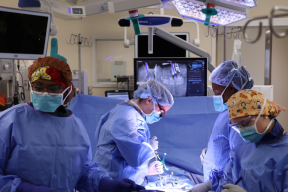
Dr. Miranda Hayworth, a Neurosurgeon with McLeod Health, recently answered questions about minimally invasive lumbar spine surgery—what it is, when it is used, and what patients can expect.

Question: What exactly is minimally invasive lumbar spine surgery?

Answer: It is a type of back surgery where a smaller incision and specialized tools and techniques are used — such as microscopes, endoscopes, image-guided systems, and tubular retractors— to reach deep spinal structures while reducing damage to the muscles and tissues surrounding the spine. The spinal nerves, vertebrae, and discs sit deep inside the body, and this technique allows us to access them without the large incision required in traditional surgery.

Q: What are the main advantages of using minimally invasive techniques?

A: The advantages are less pain after surgery because of the smaller incision, which translates to less reliance on pain medications, smaller scars, which hold lower infection risks, and then also shorter hospital stays and hopefully faster recovery times.


Q: What types of spine procedures can be performed using a minimally invasive approach?

A: We use these techniques for a wide range of lumbar spine procedures, including:

  • Lumbar microdiscectomy – to remove herniated discs pressing on spinal nerves
  • Laminectomy – to relieve pressure in cases of spinal stenosis
  • Spinal fusions – using screws, rods, and implants to stabilize the spine due to trauma, infection, tumors, or mild deformities such as scoliosis

Q: Who is considered a good candidate for minimally invasive lumbar spine surgery?

A: I’m on the belief that minimally invasive spine surgeries should be the goal for most surgeries of the spine when it’s feasible. However, it’s not appropriate for all patients and conditions, such as:

  • Severe spinal deformities
  • Complex trauma
  • Prior fusions that need revision
  • Prior spinal surgeries with significant scarring

A good candidate is someone who:

  • Has tried non-surgical treatments without relief
  • Their spine condition is clearly identifiable on imaging such as MRI or CT
  • Is healthy enough for anesthesia and surgery
  • Has major health conditions under control
  • Understands postoperative restrictions and can follow instructions

Factors like older age, smoking, and osteoporosis can negatively impact recovery or surgical outcomes.


Q: For those who do qualify, what does the recovery process look like?

A: Recovery varies by procedure.

Non-fusion surgeries: Patients can often go home the same day.
Fusion surgeries: Typically require a one- to two-night hospital stay.

Postoperative milestones generally include:

Day of or day after surgery: Begin walking
1 week: Most patients can stop narcotic pain medications
2 weeks: Light daily activities; avoid bending, twisting, and lifting
6 weeks: Increase workload and activity
12 weeks: Expected full return to normal activities


Q: What can people do proactively to take better care of their backs?

A: Weight management is one of the most important steps. Excess weight puts tremendous strain on the spine. Anything that helps reduce weight—diet changes, increased activity, consulting with a primary care doctor, or using newer weight-loss medications if appropriate—can improve overall spine health. Weight loss also has broader benefits for conditions like diabetes, high blood pressure, and general wellbeing.


Q: Any final thoughts for patients considering this type of surgery?

A: Minimally invasive spine surgery offers significant benefits when it’s the right option. Patients should talk with a spine specialist to evaluate their condition, review imaging, and determine the best and safest approach.

SUBSCRIBE TO ENTIRE BLOG
Share
  • McLEOD REGIONAL MEDICAL CENTER FLORENCE

    843-777-2000
  • McLEOD DARLINGTON

    843-777-1100
  • McLEOD DILLON

    843-774-4111
  • McLEOD LORIS

    843-716-7000
  • McLEOD SEACOAST

    843-390-8100
  • McLEOD CHERAW

    843-537-7881
  • McLEOD CLARENDON

    803-433-3000

results appear while typing

Loading

McLeod Health

Menu
  • HOME
  • FIND A DOCTOR
  • LOCATIONS
  • SERVICES
  • PATIENT PORTAL
  • Physician Employment
  • Careers
  • Residency
  • About Us
  • Blog
  • Giving
  • Calendar
  • Medical Library
  • Patient Stories
  • McLeod News
  • Newsletter Sign-Up
  • For Employees
  • Call
  • Locations
  • PATIENT ONLINE SERVICES
  • Services
  • Search
  • Find a Doctor
  • Main Menu
  • McLEOD REGIONAL MEDICAL CENTER FLORENCE

    843-777-2000
  • McLEOD DARLINGTON

    843-777-1100
  • McLEOD DILLON

    843-774-4111
  • McLEOD LORIS

    843-716-7000
  • McLEOD SEACOAST

    843-390-8100
  • McLEOD CHERAW

    843-537-7881
  • McLEOD CLARENDON

    803-433-3000
  • McLeod Regional
    Medical Center Florence
  • McLeod Health Cheraw
  • McLeod Health Clarendon
  • McLeod Health Dillon
  • McLeod Health Loris
  • McLeod Health Seacoast
  • McLeod Health Carolina Forest
  • Care
    • Breast Health Center
    • Cancer Center
    • Cardiology
    • Children’s Hospital
    • Diabetes Center
    • Digestive Health
    • Emergency/Trauma
    • Heart
    • Home Health
    • Hospice
    • Neurosciences
    • Ophthalmology
    • Orthopedic & Spine Care
    • Palliative Care
    • Pharmacy & Outpatient Infusion
    • Plastic/Reconstructive Surgery
    • Primary Care
    • Pulmonology
    • Radiology
    • Rehabilitation
    • Respiratory Therapy
    • Sports Medicine
    • Stroke
    • Surgery
    • TeleHealth
    • Urgent Care
    • Urology
    • Vascular
    • Vein Center
    • Women’s Services
    • Wound Care - Outpatient
  • Wellness
    • Health & Fitness
  • Occupational Health
    • Onsite & Nearsite Services
    • Employee Assistance Program
    • Healthier You Wellness Program
  • Community Involvement
    • McLeod Foundation
    • Pastoral Services
    • McLeod Safe Kids
    • Volunteers
    • Guest House
  • For Providers
    • McLeod EpicLink

The information on this site is intended to increase your awareness and understanding of specific health issues and services at McLeod Health. It should not be used for diagnosis or as a substitute for health care by your physician. To report technical issues, please contact us.

©2026 McLeod Health. Code of Conduct | HIPAA Notice of Privacy Practices | Patient Bill of Rights | Nondiscrimination & Accessibility Notice | Price Transparency | Provider-Based Billing | Report a Compliment/Concern | Visitation | Download McLeod Health Mission & Values | Community Health Needs Assessments | Financial Assistance Policy