 Find a Doctor

 Locations
 Services


 Print This Page
The Role of Radiation in Breast Cancer Treatment
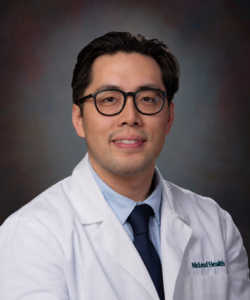
By Ariel Choi, MD
One of the biggest advances in radiation oncology for breast cancer has been our ability to give highly effective treatment in a much more focused and convenient way. Breast radiation that historically could take five or six weeks can now often be completed in approximately three weeks, and for appropriately selected patients, treatment may sometimes be completed in as few as five sessions delivered over a single week. Some women with favorable early-stage cancers may also be candidates for partial-breast radiation, where we treat only the portion of the breast at greatest risk rather than the entire breast. Randomized trials have shown excellent cancer control with these shorter approaches in appropriately selected patients.
The technology, as a whole, has improved as well. We routinely use detailed CT-based planning to see the breast and nearby organs in three dimensions and shape the radiation dose around the areas that need treatment. Image guidance helps us reproduce the patient’s position accurately during treatment. For certain patients being treated for left-sided breast cancer, techniques such as treating during a deep breath can move the heart farther away from the breast and further reduce radiation exposure. Modern guidelines specifically emphasize CT-based planning and techniques that limit dose to the heart, lungs and other normal tissues.
The goal is not simply to deliver radiation. It is to deliver the right amount of radiation to the right place while exposing as little normal tissue as reasonably possible, so that we maintain excellent cancer control while also protecting a patient’s long-term health and quality of life.
Breast cancer care is truly a team effort. A patient’s surgeon, medical oncologist and radiation oncologist may each play a pivotal role, and we have to make sure those recommendations dovetail together into one understandable plan.
During my consultation, I focus on explaining to the patient not just what I recommend but why I recommend it. I try to review the pathology and imaging with the patient, explain their individual risk factors, and discuss what radiation is expected to accomplish and which specific outcomes it is trying to improve. When there is more than one reasonable treatment option, I explain the advantages and disadvantages of each, rather than pretending there is only one correct choice.
What gives me the most hope is how personalized breast cancer treatment is becoming. The direction of the field is no longer simply toward giving more frequent or intense treatment. It is toward identifying who needs more treatment, who needs less and how we can maintain excellent cure rates while reducing the (often significant) burden of therapy.
We are already seeing that change. Improvements in radiation planning and systemic therapies allow us to treat women with higher-risk disease more effectively and precisely. Current guidelines are increasingly reflecting this risk-adapted, personalized approach.
Research is continuing to refine which patients benefit most from radiation and which patients may eventually be able to safely receive less treatment. That is exciting because progress in cancer care is not only about helping people live longer. It is also about making treatment easier, safer and less disruptive to their overall lives.
For a patient diagnosed with breast cancer today, I believe that there are more effective treatments, more individualized care pathways, and more reason for optimism than ever before.
Radiation Oncologist Dr. Ariel Choi cares for patients at the McLeod Center for Cancer Treatment and Research in Florence alongside Dr. Virginia Clyburn-Ipock, Dr. Jordan Gainey, and Julie Ball, NP. Dr. Choi received his medical degree from The Warren Alpert Medical School at Brown University in Providence, Rhode Island. He completed his Radiation Oncology residency at Wake Forest University in Winston-Salem, North Carolina, where he served as Co-Chief Resident. His clinical focus includes lung cancer, breast cancer, and malignancies of the brain and central nervous system, with an emphasis on advanced image-guided and stereotactic radiation techniques, including SBRT and stereotactic radiosurgery.
-
McLEOD REGIONAL MEDICAL CENTER FLORENCE
843-777-2000 -
McLEOD DARLINGTON
843-777-1100 -
McLEOD DILLON
843-774-4111 -
McLEOD LORIS
843-716-7000 -
McLEOD SEACOAST
843-390-8100 -
McLEOD CHERAW
843-537-7881 -
McLEOD CLARENDON
803-433-3000



-
McLEOD REGIONAL MEDICAL CENTER FLORENCE
843-777-2000 -
McLEOD DARLINGTON
843-777-1100 -
McLEOD DILLON
843-774-4111 -
McLEOD LORIS
843-716-7000 -
McLEOD SEACOAST
843-390-8100 -
McLEOD CHERAW
843-537-7881 -
McLEOD CLARENDON
803-433-3000
