 Find a Doctor

 Locations
 Services


 Print This Page
Reducing Your Risk of Stroke

By: Dr. Prabal Guha, McLeod Electrophysiologist & Dr. Brian Blaker, McLeod Structural Heart Cardiologist
What is Atrial Fibrillation?
Atrial fibrillation is a heart condition where the upper chamber of the heart beats irregularly. This can cause blood to pool and form clots in an area of the heart called the left atrial appendage. If a blood clot does form, it can travel through an artery to the brain and cause a stroke.
People with untreated atrial fibrillation may be at greater risk for stroke than people with normal heart rhythms. The left atrial appendage, a small pouch located on the top of the heart, is believed to be the source of a majority of stroke-causing blood clots in patients with atrial fibrillation.
All patients with atrial fibrillation are at elevated risk of having a stroke regardless of age, race, or gender. The chances of stroke increase with the following risk factors:
Congestive Heart Failure • Coronary Artery Disease • Diabetes
High Blood Pressure • Peripheral Vascular Disease
Stroke is one of the most dangerous complications of atrial fibrillation.
How Can You Reduce Your Risk Of Stroke?
Medications called anticoagulants, also known as blood thinners, can reduce the risk of blood clots that could lead to stroke. Warfarin is an example of a blood-thinning medication that keeps the blood from sticking together and forming clots. Other common ones include Eliquis, Xarelto, and Pradaxa.
Anticoagulants work well for many patients; however, there are reasons why some patients cannot take blood thinners. While they prevent blood clots, anticoagulants can also increase the risk of bleeding problems. When a bleeding event occurs, it can take longer than normal to stop bleeding. In some cases, bleeding can be quite serious and require hospitalization.
Left Atrial Appendage Occlusion/WATCHMAN
Patients who have atrial fibrillation without significant heart valve disease, and who are on anticoagulant medications, may be candidates for a device available at the McLeod Heart and Vascular Institute called the WATCHMAN Left Atrial Appendage Closure Device. The WATCHMAN, about the size of a quarter, is implanted at the opening of the left atrial appendage to prevent blood clots from entering the bloodstream and potentially causing a stroke. The device is a one-time implant that does not need to be replaced.
By closing off the left atrial appendage, the source of more than 90 percent of stroke-causing blood clots, the risk of stroke may be reduced and over time patients may be weaned off their blood thinning medications.
To perform the WATCHMAN procedure, the implant is advanced to the heart via a catheter inserted through a vein in the upper leg. Once the implant is in position in the left atrial appendage it is opened similar to the opening up of an umbrella. The implant remains permanently in the heart.
After the procedure, patients are monitored overnight in the hospital during their recovery and discharged home the next day. Typically, after six months, patients may be able to stop taking their blood thinning medications entirely.
WATCHMAN FLX Pro
McLeod began offering the WATCHMAN device more than eight years ago. Now the creators of WATCHMAN have developed the next generation, the WATCHMAN FLX Pro. The new device is designed with three new features that make the procedure safer and treat a broader range of patients. The enhanced device features a new durable coating that results in less inflammation and leads to faster, and more complete healing. The device also has three new markers that assist the physicians in positioning and anchoring the device with a new level of visual accuracy.
The WATCHAMN FLX Pro is also available in a new 40 MM size for larger appendages, which enables the treatment of a wider variety of patients. To determine the correct size needed, a transesophageal echocardiography test (TEE) and/or CT scan is performed. These tests create highly detailed pictures of the heart and its internal structures to determine if someone is a good candidate for the WATCHMAN procedure.
Are You a Candidate?
The WATCHMAN is for patients with atrial fibrillation who have an indication for anticoagulant, or blood thinning medications, to reduce their risk of stroke, but their physician is recommending this device as an alternative to long-term use of these drugs because of elevated bleeding risks or other concerns. The WATCHMAN does not cure atrial fibrillation and after receiving the implant it is important that patients continue to see their cardiologist.
To find out if you are a candidate for the WATCHMAN device, please call McLeod Cardiology Associates at 843-667-1891.
The physicians of the McLeod Heart & Vascular Institute have saved more than 400 patients from potential strokes with the WATCHMAN device. McLeod Electrophysiologists Dr. Prabal Guha, Dr. Cyrus Kocherla, and Dr. Kishore Subnani and McLeod Structural Cardiologists Dr. Brian Blaker and Dr. Ravi Parikh all offer the newest version of stroke risk reduction therapy with WATCHMAN FLX Pro which is enhanced with a coating designed to improve the healing process.
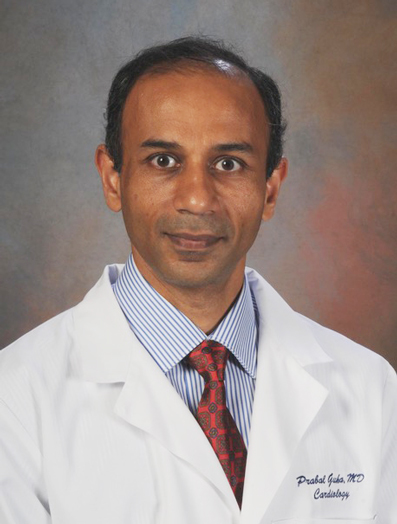 Dr. Prabal Guha
McLeod Electrophysiologist
Electrophysiologist Dr. Prabal Guha of McLeod Cardiology Associates can help you manage your atrial fibrillation. Dr. Guha cares for patients at their offices located in Florence and Sumter.
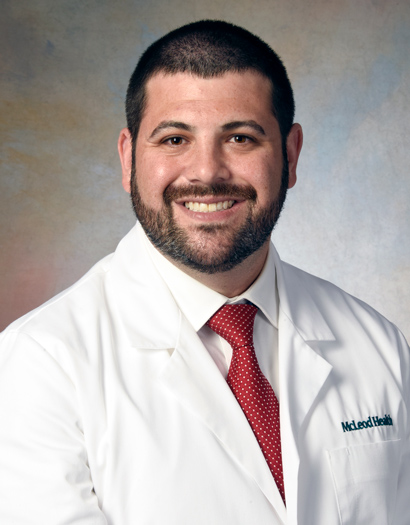 Dr. Brian Blaker
McLeod Structural Heart Cardiologist
Dr. Brian Blaker is an Interventional and Structural Cardiologist with McLeod Cardiology Associates. He serves as the Medical Director of the McLeod Structural Heart Program. Structural heart disease can be present at birth or develop with age. It refers to defects in the heart’s valves, walls, or chambers.
Physician and self-referrals are welcome for Dr. Guha or Dr. Blaker by calling 843-667-1891.
-
McLEOD REGIONAL MEDICAL CENTER FLORENCE
843-777-2000 -
McLEOD DARLINGTON
843-777-1100 -
McLEOD DILLON
843-774-4111 -
McLEOD LORIS
843-716-7000 -
McLEOD SEACOAST
843-390-8100 -
McLEOD CHERAW
843-537-7881 -
McLEOD CLARENDON
803-433-3000



-
McLEOD REGIONAL MEDICAL CENTER FLORENCE
843-777-2000 -
McLEOD DARLINGTON
843-777-1100 -
McLEOD DILLON
843-774-4111 -
McLEOD LORIS
843-716-7000 -
McLEOD SEACOAST
843-390-8100 -
McLEOD CHERAW
843-537-7881 -
McLEOD CLARENDON
803-433-3000
