 Find a Doctor

 Locations
 Services


 Print This Page
Education on Ischemic Strokes
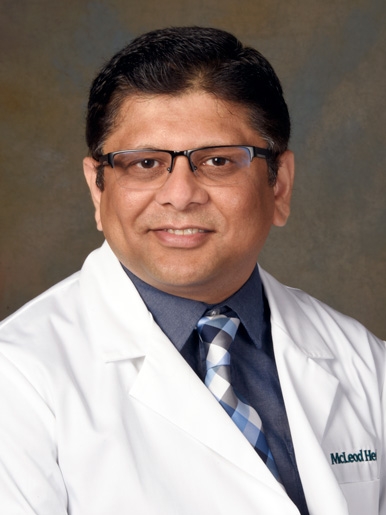
By: Dr. Ravish Kothari, McLeod Stroke Services
Ischemic stroke, the most common type of stroke, is caused by a blockage in an artery that supplies blood to the brain. Those with a family history or personal history of stroke are more likely to have an Ischemic stroke. Men are also more likely than women to have an Ischemic stroke. And, African Americans have a higher risk than any other race or ethnic group.
The greatest risk factor for stroke is unmanaged high blood pressure. High blood pressure is known as the “silent killer” since most people do not experience any symptoms. Many are unaware they even have high blood pressure until they receive a diagnosis after a stroke or heart attack occurs. This is why it is important to have your blood pressure checked on a regular basis by a medical professional.
Other risk factors for Ischemic stroke include:
• Atherosclerosis
• High cholesterol
• Atrial fibrillation
• Prior heart attack
• Diabetes
• Smoking
• Being overweight, especially if you have a lot of abdominal fat
Having any of these risk factors or conditions increases your risk for blood clots or fatty deposits, called plaque. As plaque builds up it limits the blood flow in the arteries in the neck or head, allowing blood clots to form. When an artery that supplies blood to the brain is blocked through a narrowing or blood clot, then an Ischemic stroke occurs.
Every minute counts for stroke patients. B.E. F.A.S.T. can lead patients to the stroke treatments they desperately need.
If you think someone may be having a stroke, remember the acronym B.E. F.A.S.T. and do
this simple test:
B-BALANCE: Does the person have a loss of balance?
E-EYES: Have they lost vision in one or both eyes?
F-FACE: Does one side of the face droop?
A-ARMS: Ask the person to raise both arms. Does one arm drift downward?
S-SPEECH: Is their speech slurred or strange?
T-TIME: If you observe any of these signs, call 9-1-1 immediately.
If you or a loved one experience any of these symptoms, it should prompt you to realize that you may be having a stroke. Once symptoms start, it is crucial to get treatment as quickly as possible to make it less likely that any damage becomes permanent. Call 911 and get to the nearest emergency department.
McLeod Regional Medical Center is certified as a Primary Stroke Center by DNV GL Healthcare. As a Primary Stroke Center, we have the ability to administer the main treatment for an Ischemic stroke – a thrombolytic medication called Tenecteplase, which breaks up clots. Guidelines from the American Heart Association and American Stroke Association state that these medications are most effective when given within three hours and in some cases four and a half hours from the start of the stroke.
Stroke is the leading cause of disability in the United States and the fifth leading cause of death. One-third of all patients have their first stroke prior to age 65. This is why the exceptional stroke care we provide for our patients and improving the care overall for our community is so crucial.
To help stay stroke-free:
• Know and control your blood pressure
• Don’t smoke; stop if you do
• Lose weight if needed
• Become more active
• Identify and manage atrial fibrillation
Work with your primary care provider on how you can live a stroke-free life.
Dr. Ravish Kothari serves as the Medical Director of Stroke Services for McLeod Regional Medical Center. He is a McLeod Neurologist who is board certified in Neurology and Vascular Neurology. Dr. Kothari received his medical degree from the Government Medical College Bhavnagar in Gujarat, India. He completed a Neurology Residency and a Neurology Vascular Fellowship at the University of South Carolina School of Medicine in Columbia, South Carolina. Dr. Kothari cares for patients at McLeod Regional Medical Center.
-
McLEOD REGIONAL MEDICAL CENTER FLORENCE
843-777-2000 -
McLEOD DARLINGTON
843-777-1100 -
McLEOD DILLON
843-774-4111 -
McLEOD LORIS
843-716-7000 -
McLEOD SEACOAST
843-390-8100 -
McLEOD CHERAW
843-537-7881 -
McLEOD CLARENDON
803-433-3000



-
McLEOD REGIONAL MEDICAL CENTER FLORENCE
843-777-2000 -
McLEOD DARLINGTON
843-777-1100 -
McLEOD DILLON
843-774-4111 -
McLEOD LORIS
843-716-7000 -
McLEOD SEACOAST
843-390-8100 -
McLEOD CHERAW
843-537-7881 -
McLEOD CLARENDON
803-433-3000
