 Find a Doctor
 Locations
  Services

 Print This Page
 Are You a Candidate for Minimally Invasive Spine Surgery?
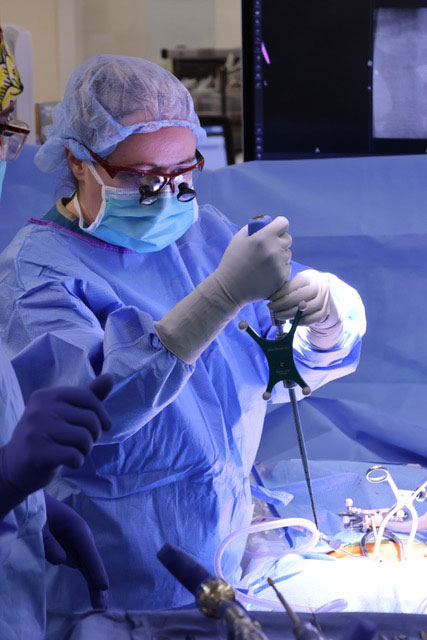
Dr. Miranda Hayworth
McLeod Neurosurgeon
Lower back pain is a widespread concern. An estimated 80 percent of adults worldwide are affected by low back pain at some point in their lives.
The prevalence of lower back pain increases with age, with the highest rates occurring between the ages of 45 and 64. Women are slightly more likely to experience lower back pain than men. Approximately 15 to 20 percent of people with lower back pain experience chronic pain, lasting for more than three months.
Lower back pain additional facts:
- It is a common reason for doctor’s visits and missed work
- The exact cause is often unknown, but can be related to factors such as muscle strains, spinal disc degeneration, and obesity
- Most cases resolve within a few weeks or months, but some may experience chronic pain or recurring episodes
Management of persistent lower back pain should start with your primary care physician. Your healthcare provider might suggest spine surgery if you have a back problem that has not gotten better with treatments such as medicine or physical therapy.
Consult a neurosurgeon if the pain is persistent and has not improved with conservative therapies, or if it’s caused by structural issues like herniated discs, spinal stenosis, or injuries.
A referral to a neurosurgeon would also be recommended if the back pain involves symptoms of nerve compression, such as radiating pain, numbness, or weakness in the legs or arms. Neurosurgeons specialize in conditions affecting the nervous system, including the spinal cord and nerves.
A neurosurgeon can provide an evaluation, determine the cause, and recommend surgical or non-surgical options. A referral does not automatically mean surgery is necessary.
When surgery is needed for lower back issues there are two surgical options. Open back surgery, which is performed through a large incision, or minimally invasive surgery, performed through small incisions and specialized tools. Minimally invasive surgery typically results in less pain, lower risk of infection, and faster recovery, but open surgery may be necessary for complex conditions that require a larger view of the spine.
Your doctor will determine the best surgical option based on your specific medical condition, the complexity of the procedure needed, and your overall health.
Minimally invasive lumbar spine surgery refers to a surgical procedure of the lower back (lumbar spine) performed at McLeod Regional Medical Center. This technique aims to treat spinal conditions such as herniated discs, spinal stenosis, and spinal instability.
Types of Minimally Invasive Lumbar Spine Surgery
There are several types of minimally invasive lumbar spine surgery available, including:
- Microdiscectomy:
Removal of a small portion of the herniated disc that is compressing the nerve
- Laminectomy:
Removal of part of the lamina (bone) to relieve pressure on the spinal cord
- Lateral lumbar interbody fusion (LLIF):
Placement of a bone graft or metal implant between two vertebrae to stabilize the spine
- Transforaminal lumbar interbody fusion (TLIF):
Similar to LLIF, but the graft or implant is inserted through a small incision in the back of the spine
Conditions Treated with Minimally Invasive Lumbar Spine Surgery
- Herniated disk
- Spinal stenosis (narrowing of the spinal canal)
- Spinal deformities (like scoliosis)
- Spinal instability
- Spondylolisthesis (when a vertebra slips forward)
- Spondylolysis or pars defect (a defect in part of a lower vertebrae)
- Fractured vertebra
- Removal of a tumor in the spine
- Infection in the spine
Recovery
Recovery time after minimally invasive lumbar spine surgery varies depending on the individual and the complexity of the procedure. Most patients can:
- Go home within 24 to 48 hours
- Resume light activities within a few weeks
- Return to work or exercise within 3 to 6 months
- Physical therapy is typically recommended to regain strength and mobility
Only a qualified surgeon can determine if minimally invasive lumbar spine surgery is right for you. The physicians at Florence Neurosurgery & Spine at McLeod Health and McLeod Spine Center use this spine surgery approach. They will work with you to help develop a treatment plan tailored to meet your needs.
Neurosurgeon Dr. Miranda Hayworth cares for patients at Florence Neurosurgery and Spine at McLeod Health. Dr. Hayworth provides the full spectrum of neurological and spine care, with special interest in minimally invasive procedures and degenerative spine disease. For more information or to schedule an appointment, call 843-673-0122.
-
McLEOD REGIONAL MEDICAL CENTER FLORENCE
843-777-2000 -
McLEOD DARLINGTON
843-777-1100 -
McLEOD DILLON
843-774-4111 -
McLEOD LORIS
843-716-7000 -
McLEOD SEACOAST
843-390-8100 -
McLEOD CHERAW
843-537-7881 -
McLEOD CLARENDON
803-433-3000



-
McLEOD REGIONAL MEDICAL CENTER FLORENCE
843-777-2000 -
McLEOD DARLINGTON
843-777-1100 -
McLEOD DILLON
843-774-4111 -
McLEOD LORIS
843-716-7000 -
McLEOD SEACOAST
843-390-8100 -
McLEOD CHERAW
843-537-7881 -
McLEOD CLARENDON
803-433-3000
